Content is everywhere.
Every brand is posting. Every business is publishing. Every platform is crowded.
So why do most businesses still struggle to grow through content?
Because random posting is not a strategy.
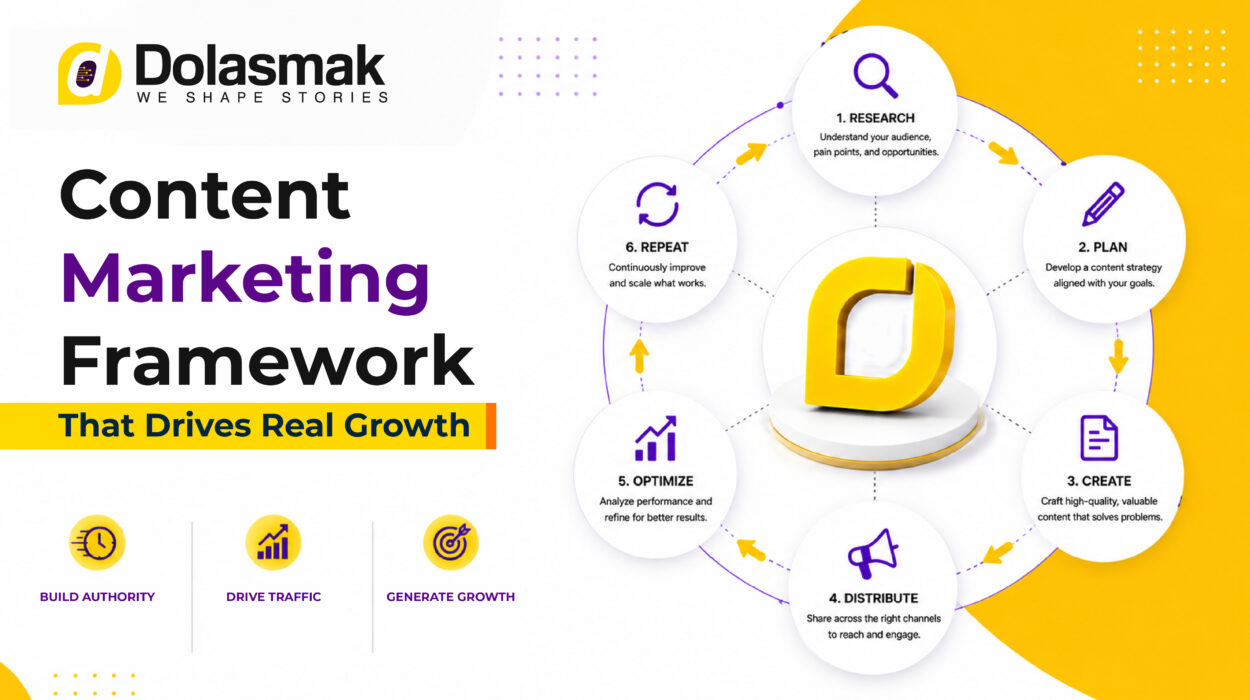
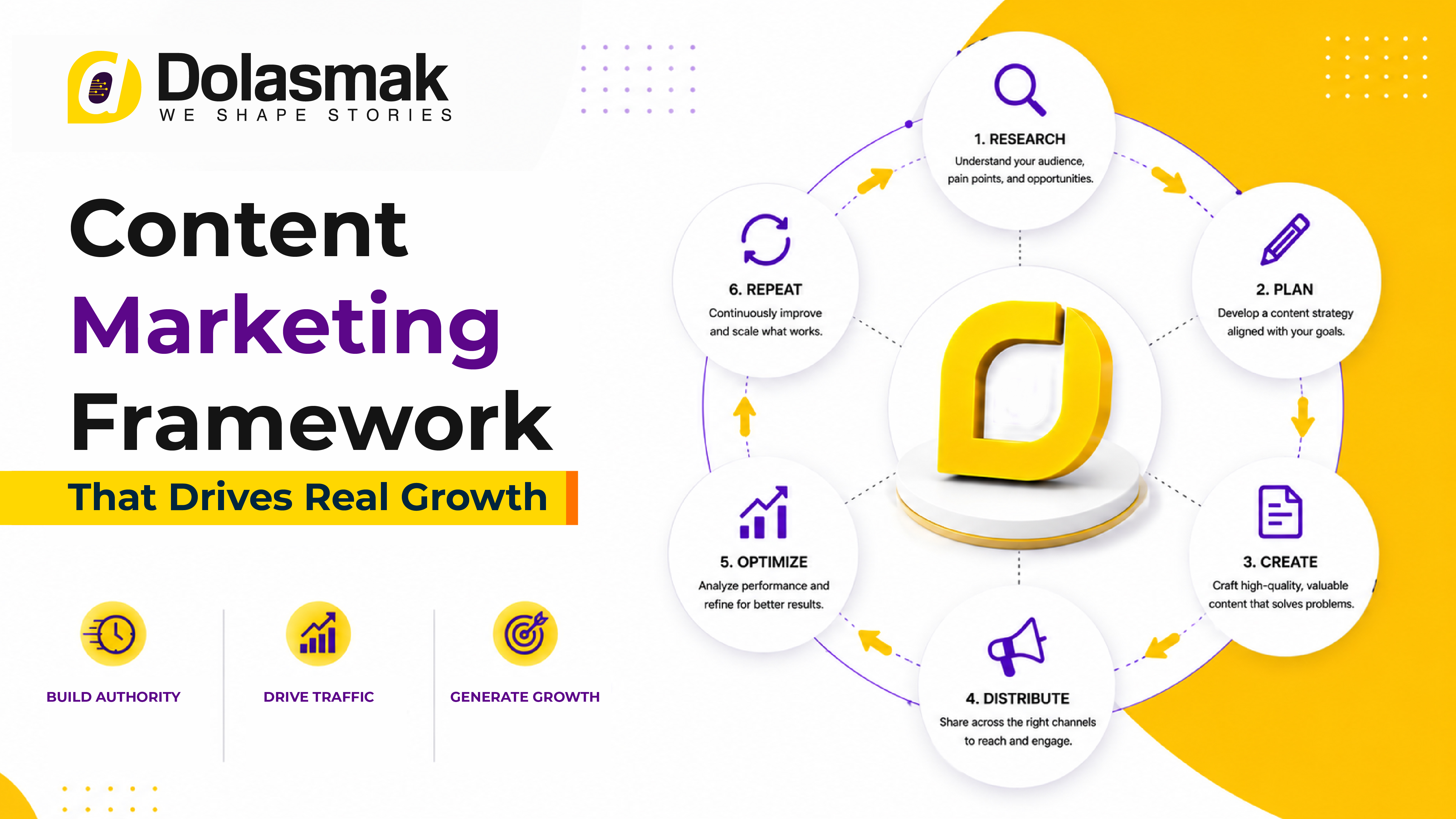
Real growth comes from having a structured content marketing strategy built around audience behavior, business goals, and consistent execution.
In 2026, successful content is no longer about posting more. It’s about creating the right content, distributing it effectively, and measuring what actually works.
Let’s break down a practical content framework 2026 businesses can use to drive real results.
Building a Data-Driven Content Strategy
Most content fails before it’s even published.
Not because the design is bad.
Not because the captions are weak.
It fails because there’s no strategy behind it.
What a Strong Content Strategy Includes
A proper digital content strategy answers four questions:
- Who are you targeting?
- What problems are they trying to solve?
- What type of content do they consume?
- What action should they take next?
Without these answers, content becomes noise.
Why Data Matters
Content decisions should not rely on assumptions.
Use data to understand:
- Search intent
- Audience behavior
- Engagement patterns
- Platform performance
This helps businesses create content people actually care about.
If you want deeper insights into planning and strategy, you can explore this Content Marketing Guide by HubSpot.
The Importance of SEO Content Planning
Content without discoverability has limited impact.
Strong SEO content planning helps businesses:
You can also explore the official Google Search Central SEO Documentation to understand SEO best practices.
- Rank for relevant searches
- Attract organic traffic
- Build long-term visibility
Instead of creating random topics, focus on content aligned with real user questions.
Build Around Content Pillars
One of the smartest ways to structure a content system is through content pillars.
Example:
- Educational content
- Industry insights
- Case studies
- Behind-the-scenes content
- Problem-solving content
This creates consistency and improves authority over time.
Content Types That Convert in 2026
Not all content performs equally anymore.
User attention is shorter, platforms are more competitive, and algorithms prioritize engagement quality over quantity.
That’s why businesses need content formats designed for both visibility and retention.
1. Short-Form Video Content
Short videos dominate engagement across:
- Instagram Reels
- TikTok
- YouTube Shorts
Why?
Because they are:
- Fast to consume
- Easy to share
- Highly engaging
2. Educational Content
People engage with content that teaches them something useful.
This includes:
- How-to guides
- Industry tips
- Step-by-step breakdowns
- Explainer posts
Educational content builds trust and authority.
3. Problem-Solution Content
This format works because it feels relevant.
Example:
“Why your ads are not converting”
“How to improve website engagement”
Content that addresses real pain points performs better.
4. SEO Blogs and Long-Form Content
Long-form content still matters — especially for organic search visibility.
Blogs help businesses:
- Rank on search engines
- Build topical authority
- Improve inbound traffic
This remains a critical part of any inbound marketing strategy.
5. User-Generated and Social Proof Content
Customers trust customers.
Reviews, testimonials, and user experiences often outperform traditional promotional content.
Distribution Channels That Maximize Reach
Creating content is only half the work.
Distribution determines whether anyone actually sees it.
Many businesses publish good content… but distribute it poorly.
1. Search Engines (SEO)
SEO provides long-term discoverability.
Optimized content can continue generating traffic months after publishing.
This is why SEO remains central to content for business growth.
2. Social Media Platforms
Each platform serves a different purpose:
- Instagram → Engagement & awareness
- LinkedIn → Authority & B2B reach
- TikTok → Discovery & viral reach
- YouTube → Long-term content visibility
The key is adapting content for platform behavior.
3. Email Marketing
Email is still one of the highest ROI distribution channels.
It helps businesses:
- Re-engage audiences
- Share valuable content
- Drive repeat traffic
4. Community-Based Distribution
Communities build stronger engagement than broad broadcasting.
Examples:
- Facebook groups
- Reddit communities
- LinkedIn groups
These spaces often drive more meaningful interaction.
Measuring Content Performance Metrics
Content without measurement leads to wasted effort.
Businesses need to track what actually contributes to growth.
Metrics That Matter
Focus on:
- Engagement rate
- Watch time
- Click-through rate (CTR)
- Organic traffic
- Conversion rate
- Shares and saves
Why Vanity Metrics Mislead
High likes do not always mean high impact.
The real goal is:
- Attention
- Trust
- Conversions
Not just visibility.
Improve Through Testing
The best content strategies evolve constantly.
Test:
- Hooks
- Formats
- Headlines
- Posting times
Then optimize based on performance.
Why Content Marketing Often Fails
Most businesses fail because they:
- Post inconsistently
- Chase trends blindly
- Ignore audience intent
- Focus only on promotion
People don’t engage with content that constantly sells.
They engage with content that helps.
Real-World Example
Let’s compare two businesses:
Business A:
- Random posting
- No SEO strategy
- Inconsistent messaging
Result → Low engagement and weak growth
Business B:
- Structured content pillars
- SEO-focused planning
- Consistent distribution
Result → Higher reach, authority, and conversions
The difference isn’t volume.
It’s structure.
FAQs
What is a content marketing framework?
A content marketing framework is a structured system for planning, creating, distributing, and measuring content to achieve business goals.
How to create a content strategy?
Start by identifying your audience, defining goals, researching search intent, and creating consistent content around key topics.
What type of content drives engagement?
Educational content, short-form videos, problem-solving posts, and relatable storytelling typically generate the highest engagement.
Final Thoughts
Content marketing is no longer about “posting consistently.”
It’s about creating systems that drive visibility, trust, and growth.
A strong content marketing strategy helps businesses:
- Attract the right audience
- Build authority
- Improve discoverability
- Generate long-term results
The brands growing fastest today are not creating more content.
They’re creating smarter content.
Call to Action
At Dolasmak Digital, we help businesses build scalable digital content strategies designed for real growth.
From SEO planning to content distribution and performance optimization, we create systems that turn content into a growth engine.
If you’re ready to build a smarter content strategy—
Let’s create your content marketing framework today.