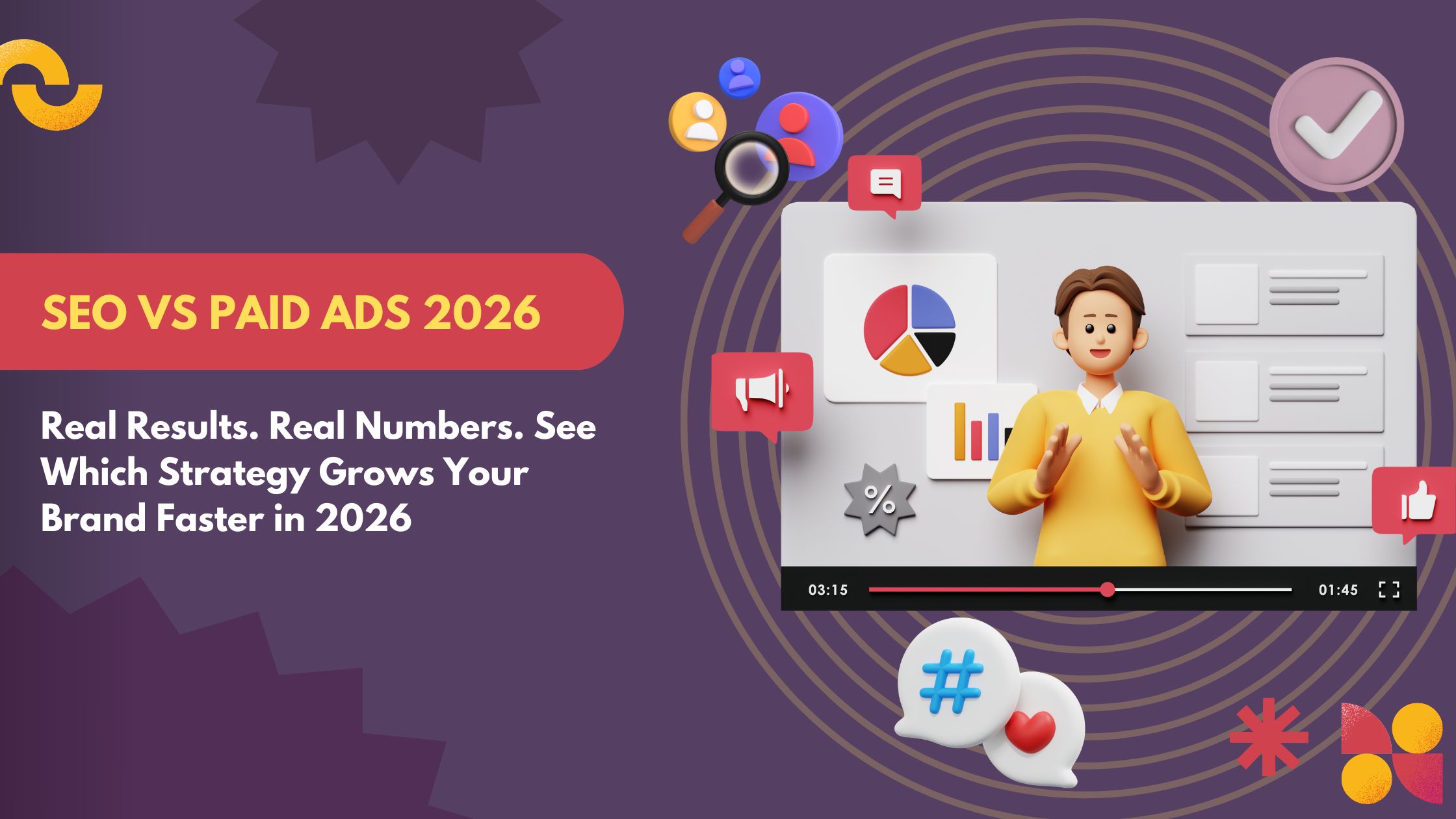
SEO vs Paid Ads: Which Strategy Delivers Better Results for Your Brand in 2026?
Two years ago, I faced a choice that kept me up at night.
My business needed visibility. Fast. But the marketing budget? Limited. Should I invest in SEO or pour everything into Google Ads?
I tried paid ads first. Within hours, traffic flooded in. It felt incredible. But the moment I paused the campaign to catch my breath? The traffic disappeared completely. Like turning off a faucet.
Then I tried SEO. The first month? Almost nothing. Month two? A tiny trickle. Month four? Things started moving. By month eight, organic traffic exceeded what my ads had ever delivered and it kept growing without me spending another dollar.
The data backs this up. SEO delivers an average ROI of 748%, while paid ads typically return about 200%. But here’s what those numbers don’t tell you: the right choice depends entirely on your situation, timeline, and goals.
This guide breaks down exactly when to use each strategy and why the smartest brands use both.
SEO vs Paid Ads — What’s the Core Difference?
Before we compare numbers, let’s clarify what we’re actually talking about.
How Organic Search Works
SEO (Search Engine Optimization) means optimizing your website and content to rank in search results naturally. No payments to appear. No ongoing costs per click.
You create valuable content, optimize technical elements, build your site’s authority, and target the right keywords. Over time, search engines start showing your pages to people searching for what you offer.
How Paid Advertising Works
Paid ads (PPC or Pay-Per-Click) means buying visibility through platforms like Google Ads, Facebook Ads, or LinkedIn. You get charged each time an advertisement is clicked.
You set a budget, choose your audience, write ad copy, and launch. Within hours, you’re visible to potential customers.
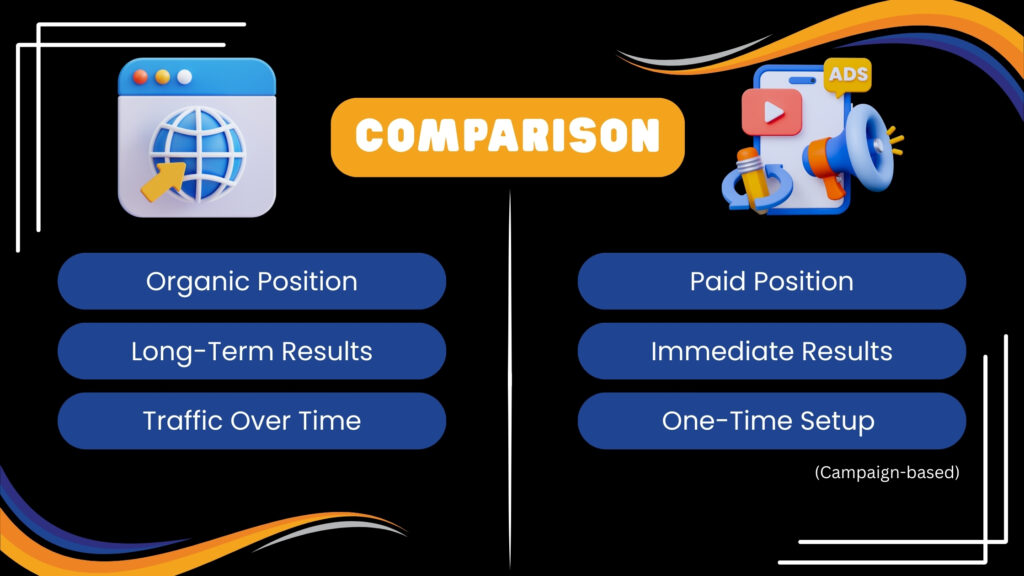
The fundamental difference? SEO builds assets that keep working. Paid ads rent visibility that stops when you stop paying.
SEO Benefits for Long-Term Brand Growth
Let me share why SEO has become my primary investment.
Sustainable Traffic
One of SEO’s greatest strengths is that it continues to deliver results long after the initial work is done. Unlike paid ads which disappear the moment you stop paying, a strong organic presence keeps working in the background to bring in leads.
I published a comprehensive guide 18 months ago. It still drives 30-40 qualified leads monthly without additional work. That’s compounding value.
Authority Building
When you rank organically, people trust you more. Studies show users trust organic results significantly more than paid ads 94% skip sponsored listings entirely.
Ranking high tells visitors: “Search engines vetted us. We’re credible enough to earn this position.”
Cost Advantages
Once you rank, additional traffic costs almost nothing. According to 2025 data, SEO delivered nearly 5X better return on ad spend at a fraction of the cost per paying customer.
Real numbers from home service businesses show every dollar spent on SEO returned $19.90, while every dollar on ads returned $4.40.
That’s a massive difference. And it explains why top companies invest heavily in SEO first.
The ROI looks even better over time. SEO provides a minimum ROI of 500% over 6-12 months, with peak performance typically hitting in years two and three.
Paid Ads Benefits for Fast Results
But SEO isn’t always the answer. Paid ads solve problems SEO can’t.
Immediate Visibility
Need traffic today? SEO can’t help you. It takes months to build momentum.
Paid ads put you in front of potential customers within hours. Launch a campaign in the morning, get clicks by afternoon.
Targeted Audience Control
With PPC, you control exactly who sees your message. Target by demographics, interests, location, search terms, time of day, and device type.
This precision matters. PPC visitors are 50% more likely to purchase than organic ones in the short term because you’re reaching people at exactly the right moment with tailored messaging.
Scalable Performance
Want more traffic? Increase your budget. Want less? Lower it. Pause campaigns anytime.
This flexibility helps during seasonal pushes, product launches, special promotions, and testing new markets before committing to SEO.
Cost Comparison — SEO vs PPC
Let’s talk real numbers.
Budgeting Considerations
SEO typically costs $1,500-$10,000 monthly depending on competition and scope. This includes link building, technical optimization, content production, and continuing upkeep.
PPC costs break down differently. Most businesses invest $9,000-$10,000 monthly in combined ad spend and management. The average cost per click runs $2-$5 in most industries, though legal or insurance clicks can cost $50+.
Platform-specific median monthly spends for 2025: Google Ads ($1,024.79), Meta Ads ($784.33), LinkedIn Ads ($734.53), and Microsoft Ads ($353.76).
ROI Expectations
SEO delivers higher long-term ROI but requires patience. Positive ROI of SEO campaigns is achieved in about 6 to 12 months, with peak results in years 2-3.
In 2025, the median return on investment from SEO marketing is 748%, meaning that businesses make $7.48 for every $1 invested. High-value sectors hit much higher medical devices post 1,183% ROI, higher education delivers 994%.
Paid ads offer faster but lower returns. Companies earn about $2 for every $1 spent on Google Ads a 200% ROI.
The problem is that you are renting rather than creating your visibility when you exclusively use sponsored advertisements. The moment you stop paying, the leads stop coming. There’s no slow decline. Your ads disappear immediately, and you’re right back where you started with no organic presence to fall back on.
SEO costs decrease over time as your authority grows. PPC costs remain constant or increase with competition.
Which One Should Your Brand Choose?
The answer depends on your specific situation.
Best for Startups
If you’re just launching, you need both but in different proportions.
Start with 70% of your budget on paid ads for immediate visibility while building brand awareness. Allocate 30% to SEO foundations proper site structure, initial content, and technical optimization.
As organic rankings improve, gradually shift toward 60% SEO and 40% paid ads.
Best for E-Commerce
E-commerce businesses benefit from both strategies working together.
Use SEO for product category pages, buying guides, comparison content, and evergreen product descriptions.
Use paid ads for seasonal promotions, new product launches, retargeting campaigns, and competitor keyword targeting.
E-commerce shows 317% ROI from SEO, which looks smaller than other industries but still drives millions in added revenue due to transaction scale.
Best for Local Businesses
Local businesses win big with SEO. Local SEO is less competitive than national campaigns, builds trust within your community, generates higher-converting traffic, and costs less to dominate than paid ads.
Real data from home service businesses (HVAC, plumbing, electrical) showed SEO delivering nearly 5X better return on ad spend compared to paid campaigns.
Use paid ads strategically for immediate needs during slow seasons, emergency services, new service area expansion, and special promotions.
SEO + Paid Ads — Why a Hybrid Strategy Works Best
Here’s what I learned: treating this as “either/or” limits your potential.
Multi-Channel Visibility
When you appear in both paid and organic results, you dominate the search page. Studies show combined visibility increases click-through rates and brand recall significantly.
Someone might skip your ad the first time. But seeing you in both paid and organic positions builds trust that makes them more likely to click eventually.
Balanced ROI
A hybrid approach balances short-term needs with long-term growth. Paid ads fund immediate operations while SEO builds sustainable traffic.
To achieve maximum impact, allocate your budget based on business goals. Invest 60-70% in SEO for sustainable long-term traffic growth, and allocate 30-40% to PPC for immediate visibility and targeted campaigns.
Data-Driven Decision Making
Your paid ads provide instant data about what messages resonate, which keywords convert best, what audiences respond, and which offers perform.
Use these insights to inform your SEO strategy. If certain ad keywords convert exceptionally well, prioritize them in your SEO content.
This creates a feedback loop where each channel improves the other.
As we discussed in our guide on social media marketing trends in Pakistan, integrated digital strategies consistently outperform single-channel approaches.
What’s Not Working in 2025
Some tactics that worked before are failing now.
Relying Solely on Paid Ads
Businesses depending exclusively on paid ads face rising costs, no lasting assets, vulnerability to platform changes, and zero value when budgets tighten.
CPC costs continue climbing. Competition intensifies. Your cost per acquisition keeps rising while building nothing sustainable.
Ignoring Mobile Experience
Both SEO and paid ads fail if your site doesn’t work perfectly on mobile. Most traffic comes from phones now. Poor mobile experience kills conversions regardless of how people find you.
Neglecting Search Intent
Targeting keywords without understanding intent wastes money. Someone searching “marketing agency pricing” has different intent than someone searching “best marketing agency near me.”
Match your content and ads to what people actually want at that moment.
Setting Unrealistic Expectations
Expecting SEO results in 30 days sets you up for disappointment. Expecting paid ads to build brand authority does the same.
Each strategy has strengths and limitations. Understanding both helps you use them correctly.
The Future of Search Marketing
Looking ahead, both strategies face changes.
AI-driven search features are changing organic CTR. AI Overviews, zero-click results, and other features mean ranking alone doesn’t guarantee clicks like it used to.
That said, 57% of B2B marketers say SEO is still their most effective channel, and 70% confirm SEO drives more sales than PPC. The fundamentals remain strong.
Paid ads are getting more sophisticated with AI-powered targeting, automated bidding, and hyper-personalized messaging. But costs keep rising as competition increases.
The winners in 2025 and beyond will be brands that adapt quickly, use data to guide decisions, integrate multiple channels effectively, and focus on genuine value over manipulation.
Making Your Decision
Here’s my honest advice based on years of testing both.
If you need results this month: Use paid ads. There’s no alternative for immediate visibility.
If you’re building for the long term: Prioritize SEO. The compounding returns justify the patience required.
If you’re serious about growth: Do both. Let paid ads fund current operations while SEO builds your future.
The businesses struggling are those stuck in analysis paralysis, unwilling to invest in either strategy properly.
The businesses winning are those that commit resources, give strategies time to work, and measure what actually matters not vanity metrics but real revenue impact.
The Real Choice You’re Making
Here’s what this decision is really about: Are you building assets or renting visibility?
Paid ads are like renting an apartment. You get immediate access. Everything works today. But you’re not building equity. When you stop paying rent, you’re out.
SEO is like buying property. The upfront cost is higher. You wait longer to see value. But every payment builds equity that continues appreciating. Eventually, you own something valuable that keeps delivering without ongoing costs.
Most businesses need both at different stages. Rent while you build. Use paid ads to fund operations while your SEO investment matures.
The businesses that fail are those that do neither properly dabbling in both without real commitment, or putting all resources into one while ignoring the other completely.
The businesses that win understand that digital marketing isn’t about choosing the perfect tactic. It’s about matching strategies to your current reality, having patience for long-term plays, and using data to guide decisions rather than guesses.
Ready to Stop Guessing and Start Growing?
You’ve seen the numbers. You understand the trade-offs. Now comes the hard part: actually implementing a strategy that works for your specific situation.
At Dolasmak, we don’t push SEO or paid ads as universal solutions. We analyze your business, goals, budget, timeline, and competition then recommend what actually makes sense for you.
Sometimes that’s aggressive SEO investment. Sometimes it’s paid ads testing before committing to SEO. Often, it’s a strategic combination that balances short-term needs with long-term growth.
We’ve helped businesses in Pakistan and globally navigate exactly this decision. We’ve seen what works and what wastes money across industries, budgets, and market conditions.
Stop letting this decision paralyze you. Every month you delay is a month competitors gain ground.
Contact Dolasmak today for a consultation about your search marketing strategy. We’ll analyze your current situation, identify your biggest opportunities, and create a realistic plan that fits your goals and resources.
Visit dolasmak.com or reach out to our team. Your search marketing breakthrough starts with knowing which strategy to use and when.