I’ll never forget the day Michael called me, his voice thick with frustration. “I’m spending $10,000 a month on ads, getting tons of traffic, but barely any sales. Where am I going wrong?”
His story isn’t unique. I’ve seen countless business owners pouring money into marketing, watching potential customers flood their websites, only to have 98% of them vanish without a trace. No purchase. No contact. Just… gone.
The heartbreaking reality? The average conversion rate for a sales funnel landing page is just 2.35%, meaning 97.65% of your hard-earned traffic is slipping through your fingers. But here’s the game-changer: top-performing funnels achieve conversion rates of 5.31% or more more than doubling the industry average.
What separates these winners from the overwhelmed majority struggling to break even on their marketing spend? A strategically designed, results-driven marketing funnel that guides prospects from curiosity to conversion with surgical precision.
What Exactly Is a Marketing Funnel (And Why Your Business Will Die Without One)?
Imagine walking into a store where products are randomly scattered, there’s no one to help you, and the checkout counter is hidden in a back room with no signs pointing to it. Sounds absurd, right? Yet that’s exactly what most businesses do with their online marketing.
A well-optimized conversion funnel isn’t a one-off attempt to guide a user from one place to another. It’s a holistic approach that strategically ties your marketing and sales activities into one streamlined system for the audience to move through.
Think of your marketing funnel as a strategic pathway a carefully designed journey that transforms strangers into raving fans who can’t wait to buy from you. Every step is intentional, every touchpoint purposeful, every message crafted to move prospects closer to that coveted conversion.
But here’s where most businesses get it catastrophically wrong: they treat their funnel like a straight pipe instead of understanding that modern customer journeys are complex, non-linear experiences requiring sophisticated multi-touchpoint strategies.
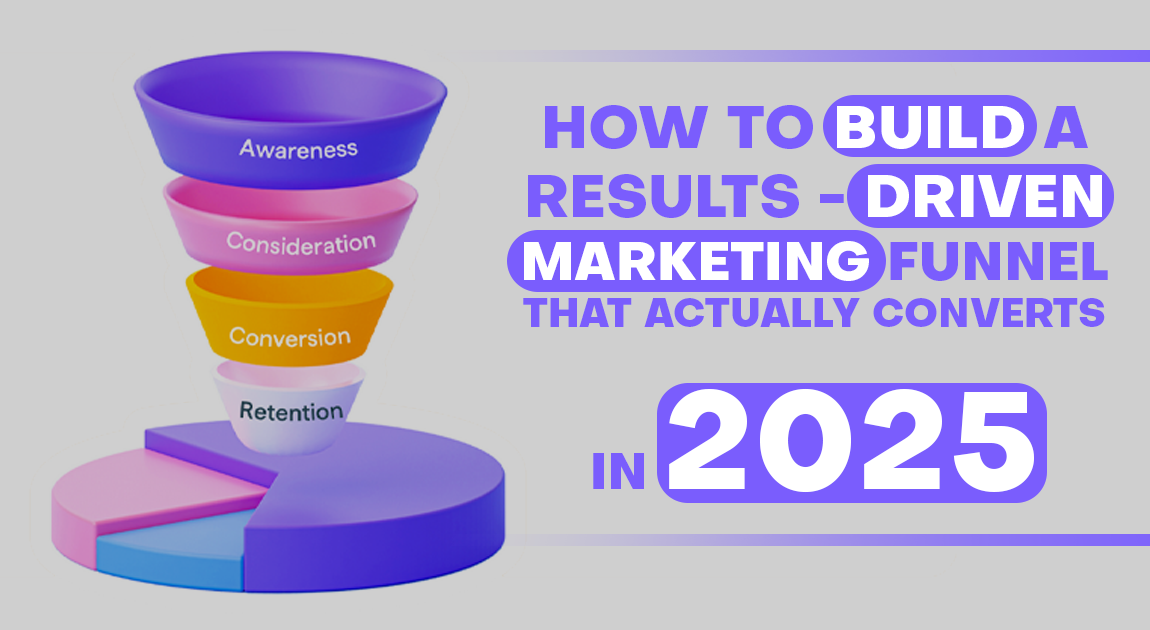
The Marketing Funnel Stages Explained: Your Complete Customer Journey Map
Let’s break down the anatomy of a high-converting funnel using the proven AIDA framework that’s been refined for 2025’s digital landscape.
Awareness Stage (Top of Funnel – TOFU): This is where strangers discover you exist. Your potential customers are experiencing a problem but might not even fully understand what they’re looking for. They’re scrolling through social media, searching Google, or consuming content, trying to figure out their situation.
Your mission? Show up where they’re looking with valuable content that makes them think, “Wow, this brand gets me!” This isn’t about selling it’s about building trust through education, entertainment, or inspiration.
Interest Stage (Middle of Funnel – MOFU): Now prospects know who you are and are actively considering whether you’re the right solution. They’re comparing options, reading reviews, downloading lead magnets, and engaging with your content more deeply.
This is where you nurture relationships, demonstrate expertise, and showcase what makes you different. Smart businesses use email sequences, retargeting campaigns, and valuable content upgrades to stay top-of-mind while building authority.
Desire Stage (Bottom of Funnel – BOFU): Your prospects want what you offer, but need that final push. They’re evaluating whether the investment makes sense, looking for social proof, and seeking reassurance that you’ll deliver on your promises.
Case studies, testimonials, product demonstrations, limited-time offers, and risk-reversal guarantees become your secret weapons here.
Action Stage (Conversion): The moment of truth where prospects become customers. But here’s the crucial insight most miss: even minor optimizations such as page speed improvements or better follow-up sequences can double or triple conversion rates.
Your checkout process, sales conversation, or conversion mechanism needs to be frictionless, trustworthy, and crystal clear. Every unnecessary step or confusing element costs you conversions.
Marketing Funnel vs Sales Funnel: Understanding the Critical Difference
Here’s were confusion costs businesses millions. Many people use these terms interchangeably, but understanding the distinction transforms results.
A sales funnel targets qualified leads, emphasizing closing the sale, while a conversion funnel guides specific actions like sign-ups or purchases. The marketing funnel casts a wider net, focusing on generating awareness and interest among cold audiences. The sales funnel takes warmer leads and converts them into paying customers.
Think of it like dating: marketing is meeting people and building attraction, while sales is moving toward commitment. You need both, but trying to propose marriage on the first date (pushing for sales too early in the marketing funnel) rarely ends well.
Why Every Business Needs a Funnel (Even If You Think You Don’t)
“But we get sales without a formal funnel!” I hear this all the time. Sure, you might stumble into customers occasionally, but here’s what you’re missing:
Predictable Revenue: Without a structured funnel, your business runs on hope and luck. With one, you can predict that X visitors will become Y leads, and Z% will convert into customers. This predictability enables strategic growth planning.
Scalability: Random marketing tactics don’t scale. Funnels do. Once you’ve proven your funnel converts profitably, you simply pour more traffic into the top, knowing exactly what comes out the bottom.
Customer Intelligence: A proper funnel tells you exactly where prospects get stuck, what messages resonate, and which offers convert. This data is pure gold for optimization.
Competitive Advantage: Marketers must move beyond linear funnels and lean into AI to power execution, giving sophisticated businesses massive advantages over competitors still using outdated approaches.
How to Build a Marketing Funnel: Your Step-by-Step Blueprint
Let’s get practical. Here’s how to construct a results-driven funnel from scratch, whether you’re a startup in Karachi or an established business in Dubai.
Step 1: Define Your Ideal Customer Avatar: You can’t guide someone on a journey if you don’t know where they’re starting or where they want to go. Failing to align messaging and strategies with the audience’s needs and values often results in failed marketing campaigns and missed opportunities.
Create detailed profiles of your perfect customers: their demographics, pain points, desires, objections, and the language they use to describe their problems. The more specific, the more powerful your funnel becomes.
Step 2: Map the Customer Journey: Plot every potential touchpoint from initial awareness through post-purchase. Where do they first hear about businesses like yours? What questions do they have at each stage? What objections arise? What would make them choose you over alternatives?
Step 3: Create Irresistible Lead Magnets: Your lead magnet—the valuable content or tool offered in exchange for contact information determines the quality of leads entering your funnel. Make it so valuable that people would happily pay for it, then give it away to build your list.
Step 4: Design Your Funnel Architecture: Map out each step: landing pages, email sequences, retargeting campaigns, content pieces, and conversion points. Every element should have a specific purpose in moving prospects to the next stage.
Step 5: Implement Marketing Automation: In 2025, using AI for ad targeting is indispensable, with AI-powered methods projected to increase conversion rates significantly. Modern funnel marketing automation tools handle email sequences, behavior triggers, personalization, and follow-up without manual intervention.
Step 6: Optimize Relentlessly: Companies using data to refine their funnels are achieving dramatically better results than those operating on assumptions. Test everything: headlines, offers, page designs, email subject lines, call-to-action buttons, and timing.
The Full-Funnel Digital Marketing Strategy: Integrating All Channels
Single-channel funnels are dying. Modern customers bounce between platforms, devices, and channels throughout their journey. Your funnel needs to follow them everywhere while maintaining consistent messaging.
Social Media and Funnel Integration: Use Facebook, Instagram, LinkedIn, and TikTok for awareness and retargeting. Your social content should drive traffic to landing pages while remarketing keeps your brand visible to engaged prospects.
SEO-Powered Funnel Content: Organic search brings highly qualified leads already searching for solutions you provide. As we discussed in Why Your Business Needs More Than Just Social Media Ads, diversified traffic sources create sustainable growth.
Email Nurture Sequences: The backbone of any high-converting funnel. Strategic email sequences educate, overcome objections, and build desire systematically.
Retargeting Campaigns: Most people need 7-13 touchpoints before converting. Retargeting ensures your brand stays visible across platforms as prospects move through their decision journey.
B2B Marketing Funnel Strategies: Selling to Businesses Requires Different Tactics
B2B funnels face unique challenges: longer sales cycles, multiple decision-makers, higher price points, and more complex solutions. Your B2B funnel needs:
Education-First Content: B2B buyers conduct extensive research. Whitepapers, case studies, webinars, and detailed guides establish your expertise and address complex questions.
Relationship Building: B2B sales are relationship-driven. Your funnel should facilitate conversations, not just push toward automated conversions.
Account-Based Approaches: Target specific companies with personalized messaging rather than casting wide nets.
Multi-Stakeholder Engagement: Your content needs to speak to different roles: end-users, technical evaluators, and financial decision-makers, each of whom has different concerns.
Common Funnel Mistakes to Avoid (That Are Costing You Thousands)
I’ve analyzed hundreds of underperforming funnels, and these mistakes appear repeatedly:
Mistake #1: Too Many Steps Every additional step in your funnel leaks prospects. If someone needs to click through five pages before they can buy, you’re hemorrhaging conversions. Simplify ruthlessly.
Mistake #2: Weak Value Propositions “We’re the best!” isn’t a value proposition. Your messaging must clearly articulate specific benefits and differentiate you from alternatives.
Mistake #3: Ignoring Mobile Experience Over 60% of web traffic is mobile. If your funnel isn’t mobile-optimized, you’re eliminating the majority of potential customers.
Mistake #4: No Follow-Up System. Failing to effectively utilize sales funnel conversion rate data by ignoring or misreading analytics prevents improvement. Most conversions don’t happen immediately—they require systematic follow-up.
Mistake #5: Generic Messaging. Treating all funnel visitors the same ignores where they are in their journey. Someone just discovering their problem needs different messages than someone comparing final options.
Mistake #6: Neglecting Post-Purchase. Your funnel shouldn’t end at conversion. The post-purchase experience determines customer lifetime value, referrals, and repeat business.
Marketing Funnel for Small Businesses: Affordable Strategies That Work
“Funnels sound expensive and complicated!” I hear your concern. The truth? Small businesses often build more effective funnels than enterprises because they stay focused and authentic.
Start Simple: Begin with one primary funnel targeting your most profitable offering. You don’t need complex multi-path funnels initially.
Leverage Free Tools: Email marketing platforms, landing page builders, and analytics tools offer free tiers sufficient for getting started.
Focus on Content: Your expertise translated into valuable content becomes your most powerful funnel asset—and costs nothing but time.
Test Locally First: If you’re a local business in Pakistan or targeting specific geographic markets, optimize for local SEO and community engagement before scaling broadly.
ROI-Focused Funnel Strategy: Making Every Dollar Count
Results-driven means ROI-focused. Every element of your funnel should justify its existence through a measurable contribution to your bottom line.
Track These Key Metrics:
- Cost per lead at each funnel stage
- Conversion rates between stages
- Customer acquisition cost
- Average order value
- Customer lifetime value
- Return on ad spend
Calculate your funnel economics: if you spend $50 to acquire a customer worth $500, and they refer two friends, your funnel is printing money. If you spend $500 to acquire a $50 customer, you’re headed for bankruptcy.
Sales Funnel Optimization Services: When to Call the Experts
Building your first funnel in-house makes sense for learning and budget constraints. But there comes a point where professional expertise accelerates results exponentially.
Consider professional funnel services when:
- You’re scaling beyond initial traction and need sophisticated automation
- Your current funnel plateaued, and you can’t identify why
- You’re entering new markets or launching significant new offerings
- Your funnel complexity exceeds your team’s technical capabilities
- Opportunity cost of learning yourself exceeds hiring experts
Digital marketing funnel experts bring proven frameworks, advanced tools, conversion psychology expertise, and objective analysis that transform good funnels into exceptional ones.
Future of Marketing Funnels 2025: What’s Changing
The funnel landscape evolves rapidly. Marketers must move beyond linear funnels to embrace more sophisticated, AI-powered approaches.
AI-Powered Personalization: Machine learning analyzes individual behavior to deliver personalized experiences at scale, showing different content, offers, and messaging based on predictive models.
Conversational Funnels: Chatbots and AI assistants guide prospects through customized journeys based on their specific questions and concerns.
Video-First Experiences: Video content dominates engagement, with video funnels outperforming text-based alternatives across most industries.
Privacy-Focused Tracking: With cookie deprecation and privacy regulations, successful funnels rely more on first-party data and direct relationships.
Multi-Channel Funnel Tracking: Understanding the Complete Picture
Modern customers interact with your brand across multiple devices and platforms before converting. Attribution becomes complex but crucial for optimization.
First-Touch Attribution: Credits the initial interaction that introduced the prospect to your brand.
Last-Touch Attribution: Credits the final touchpoint before conversion.
Multi-Touch Attribution: Distributes credit across all interactions, providing the most accurate view of what actually drives conversions.
Understanding which channels contribute to your funnel success enables smarter budget allocation and strategic decisions about where to invest for maximum growth.
Customer Journey Marketing Funnel: Creating Seamless Experiences
Your funnel should feel natural, not manipulative. The best funnels guide prospects through value-driven experiences that build trust while addressing their evolving needs.
Awareness Content: Blog posts, social media content, videos, and podcasts that attract attention and provide immediate value.
Consideration Assets: Comparison guides, detailed explainers, case studies, and demonstrations that help prospects evaluate options.
Decision Tools: Free trials, consultations, detailed proposals, and testimonials that overcome final objections.
Delight Mechanisms: Onboarding sequences, customer education, and ongoing value delivery that transform customers into advocates.
Scaling Business with Marketing Funnels: From Startup to Enterprise
The beauty of well-designed funnels is their scalability. Once you’ve proven your funnel converts profitably, growth becomes a matter of increasing top-of-funnel traffic.
Stage 1: Validation (0-100 customers). Focus on proving your funnel concept works. Test messaging, optimize conversion points, and establish baseline metrics.
Stage 2: Optimization (100-1,000 customers). Refine every element based on data. Improve conversion rates at each stage, eliminate friction, and enhance customer experience.
Stage 3: Scaling (1,000+ customers). Invest heavily in traffic generation, knowing your funnel converts predictably. Automate processes, segment audiences, and create specialized funnel variations.
Stage 4: Sophistication (Market Leader) Implement advanced personalization, omnichannel experiences, predictive analytics, and customer journey orchestration that competitors can’t match.
Real-World Case Study: How We Helped a Struggling Business Triple Revenue
Remember Michael from the beginning? Here’s what we did:
The Problem: $10K monthly ad spend, 5,000 visitors, but only 2% converting—costing $100 per customer while the average order value was just $150.
The Solution: We rebuilt his funnel:
- Created compelling lead magnet that attracted qualified prospects
- Designed nurture sequence addressing common objections
- Optimized landing pages based on conversion psychology
- Implemented retargeting to re-engage abandoned prospects
- Added post-purchase sequence increasing repeat orders
The Results After 90 Days:
- Conversion rate increased from 2% to 6.2%
- Customer acquisition cost dropped to $32
- Average order value increased to $220 through upsells
- 40% of customers returned for a second purchase
- Monthly revenue tripled from $7,500 to $22,500
Michael’s transformed funnel now generates predictable profit, enabling strategic growth instead of frustrating uncertainty.
The Funnel Advantage: Your Path from Chaos to Clarity
Let me ask you something: How much longer can you afford to watch potential customers slip away? Every day without an optimized funnel means missed revenue, wasted marketing spend, and watching competitors capture market share that should be yours.
The businesses dominating your industry aren’t necessarily better than you—they just have superior systems for converting interest into action. They’ve invested in understanding customer psychology, mapping journeys, creating irresistible offers, and optimizing relentlessly.
Here’s the truth: Building a high-converting marketing funnel requires combining automated processes with individualized experiences, as well as utilizing analytical strategies and emotional connections.
You have two choices: continue hoping random marketing tactics eventually work or build systematic funnels that transform your business into a predictable, scalable growth engine.
The gap between where you are and where you want to be isn’t talent, luck, or resources—it’s strategy. And that strategy starts with a results-driven marketing funnel designed specifically for your business, audience, and goals.
Ready to Stop Leaving Money on the Table?
You’ve read the strategies. You’ve seen the data. You understand what’s possible. Now comes the moment that separates dreamers from achievers: taking action.
At Dolasmak, we’ve helped hundreds of businesses transform their marketing from chaotic expense into profitable investment through strategic funnel development. Whether you’re in Pakistan, Dubai, the UK, or anywhere else, our digital marketing funnel experts specialize in creating results-driven systems that scale.
Don’t let another month pass by watching leads evaporate. Your competitors are building sophisticated funnels right now. The question isn’t whether you need a high-converting funnel—it’s whether you’ll build one before they capture all the market shares.
Take the first step toward predictable, profitable growth. Contact Dolasmak today for a comprehensive funnel audit and strategy session. Let’s transform your marketing from guesswork into a science.
Ready to triple your conversion rates? Visit dolasmak.com or reach out to our team. Your funnel breakthrough starts with a single decision make it today.
Disclaimer: Marketing funnel results vary based on industry, market conditions, offer strength, and implementation quality. While strategic funnels typically outperform unstructured approaches, success requires testing, optimization, and sustained effort. Past client results don’t guarantee future outcomes.